Characteristics of Fascism.

· It concentrated all the springs of the State in a supreme leader, who demanded absolute obedience from his subordinates.

·         It rejected the democratic system by proclaiming the official party as the only one authorized to act legally in political life and occupy the positions of the State.

·         It persecuted and repressed the opponents, who had to go into exile to avoid being imprisoned or assassinated.

·         It promoted expansionist policies, which promoted the conquest of neighboring territories in search of a vital space that would ensure the provision of raw materials necessary for economic development.

·         It was based on an ideology that exalted the corporatist idea over that of individual or class interests. It promoted racist ideals that promoted discrimination and persecution of groups that threatened the idea of a united nation.

·         It manipulated the media to obtain popular support and create an ideology that would keep the people united around certain objectives, such as recovering territories lost in the past, stopping the expansion of communism, or expanding the national territory.

· It controlled education to exalt the ideas of homeland, nation and fascist ideology.
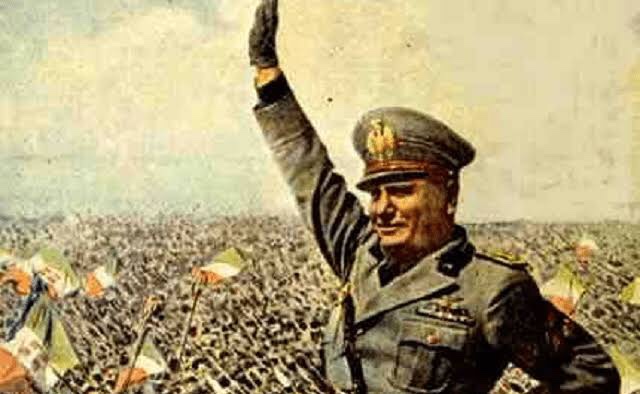
Fascismo.

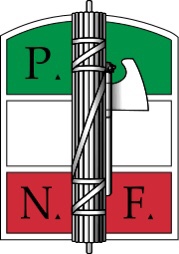
Fascism was a nationalist and totalitarian political and social movement that emerged in Italy in 1919, after the end of the First World War. Its creator was Benito Mussolini, who ruled the Italian state from 1922 to 1945.

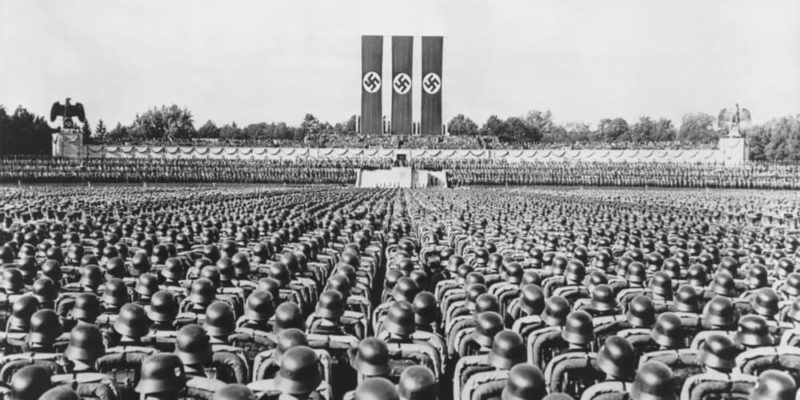
From Italy, fascism quickly spread to other countries in interwar Europe, including Germany, Romania, Bulgaria, Portugal, and Spain. Nazi Germany ruled by Adolf Hitler took fascism to its last consequences, gaining the support of much of society for war, discrimination and racism.

Fascism was based on a far-right ideology that rejected both party-competition liberal democracy and one-party socialist regimes based on Marxism-Leninism.

His totalitarian government methods included the cult of the leader’s personality, the persecution of opposition leaders, and the discrimination of minorities.

Characteristics of totalitarian regimes.

  • It is a dictatorial management system of the State, in which individual freedoms and the very existence of the individual is perceived as secondary to the power of the State.
  • It is proclaimed supreme leader, is granted excessive and prolonged power within the system, and is often venerated in an almost religious way, especially after her death.
  • Totalitarian regimes are usually governed by a single party that has full control of everything and that ends up merging with the State itself. Thus, party, government, armed forces and supreme leader operate as a single entity.
  • It manages all aspects of civic life and does not have any internal controls regarding what it can do.
  • Policies of censorship, social control and expropriation of private property are applied, so that the State can manage absolutely everything with a single criterion.
  • Fundamental human rights and civil liberties are rarely fully respected in totalitarian regimes. In the name of justice or sovereignty or the party, any type of crime can be committed.

Origin of Totalitarianism.

It is quite possible to find examples of totalitarianism from antiquity. However, they mostly emerged in the 20th century. It was then that the term was coined within the political struggle and later it was assimilated by the university academy.

Philosophers such as Jacques Maritain, Max Horkheimer or Hanna Arendt devoted part of their years of study to him, tracing him in both capitalist and socialist regimes.

The first time the term «totalitarianism» was used, it was not in the same sense that we use it today. This is how the Italian dictator Benito Mussolini called his fascist doctrine, whose political slogan was «Everything in the State, everything for the State, nothing outside the State, nothing against the State.»

Totalitarianism.

Totalitarianism is a system of government and a political practice whose fundamental principle is the absolute and unrestricted exercise of power by the State of a nation. It severely restricts individual freedoms and builds a homogeneous, implacable and coercive model of society.

Totalitarianism is a specific form of dictatorship. It can be understood as a method of organization of the State in which its four components (territory, population, justice and public powers) are rigorously administered.

In this context, there is no possible opposition and absolutely everything is subject to the designs of the ruling party. Obviously it is incompatible with any form of democracy, since it puts the State itself above all else, making it an end in itself.

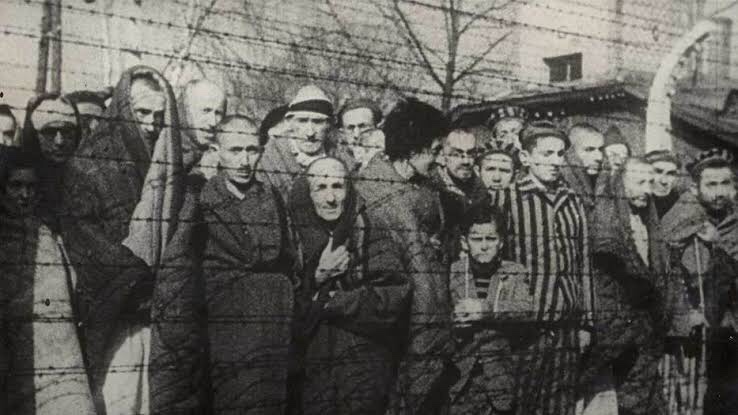
How to solve anti-Semitic ideas?

The solution is to call on all the governments of the world to take effective measures to end discrimination and violence against the Jewish people. In addition to educating, training and sensitizing populations to combat anti-Semitic stereotypes and prejudices.

Another solution is that the member states of the United Nations develop educational programs that tend to perpetuate the memory of the tragedy of the Holocaust in future generations to prevent genocides from happening again.

Current Anti-Semitism.

Despite 75 years of liberation from the Nazi death camp, anti-Semitic violence and discrimination persists in the world. As International Holocaust Remembrance Day commemorates, modern efforts in human rights and hate crime laws have sought to combat anti-Semitism alongside other forms of discrimination, although it remains a widespread problem, with experts identifying a sharp rise in anti-Semitic acts in the early 21st century.

Acts of violence and discrimination against the Jewish population affect their right to freedom of religion or belief. Violence and discrimination against Jews is manifested in attacks on synagogues and schools and in the desecration of cemeteries. In New York City, in December 2019, eight anti-Semitic attacks were recorded on the eve of Hanukkah.

Anti-Semitism is based on arguments ranging from the collective indictment of the Jews for the murder of Jesus to being considered a inferior race that must be excluded from human civilization.

Nationalism.

Nationalism is an ideology and a socio-political movement that is based on a higher level of consciousness and identification with the reality and history of a nation.With precedents in the Middle Ages, especially in absolute monarchies, modern nationalism emerged from the French Revolution, simultaneously with the heyday of the industrial bourgeoisie. Later, the fight against an invading army or the desire for independence, gave nationalism a new impetus.

In the 20th century, nationalism had two great moments: the emergence of nationalist ideas in collaboration with racist theories, both in Germany, Italy, Japan and the one that appeared in colonized countries after the Second World War. This is called totalitarian regimes.

In the imperialist nations, the great technological advances and the development of capitalism generated in their inhabitants a notorious national pride and a rivalry with the other powers, together with a great feeling of superiority towards the non-industrialized peoples, thereby justifying that they could dominate and impose them its economic and political conditions.

German hatred of Jews.

In the 19th century, religion played a less important role. Instead, thoughts arose about the differences between races and peoples. Thus originated the idea that the Jews belonged to a different people.

The defeat of Germany in World War I was for many Germans, and also for Hitler, difficult to accept. In conservative nationalist circles a theory called «the stab in the back» arises. According to this invented myth, Germany had not lost the war on the battlefield, but on her own ground, through treason. The Jews were accused by the nationalists of being generators of communism and those responsible for the German defeat.

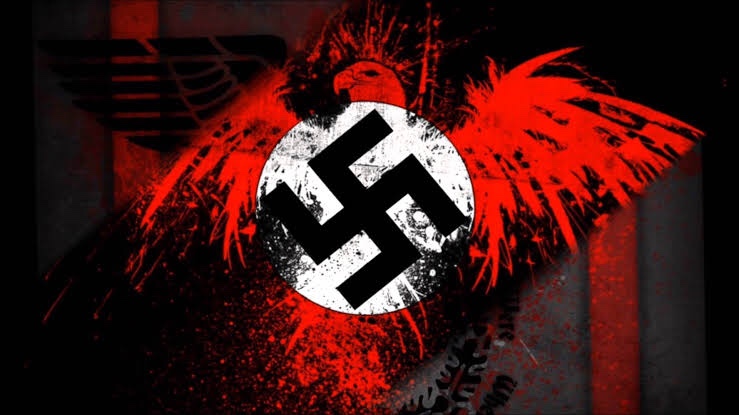
Nazism is an authoritarian and totalitarian government, which rejects the democratic system, that is why it is against communism and was considered as a Jew unish conspiracy. In the war with the Soviet Union, starting in 1941, the idea of Jewish communism generated terrible consequences because the population and prisoners of war were brutally treated by the Germans.