Results of the First Battle of Alamein.

The advance of the axis to Alexandria, Cairo and the Suez Canal stopped.

The VIII Army suffered 13,000 casualties, captured 7,000 prisoners, and had inflicted severe damage on the Axis forces in terms of men and armor.

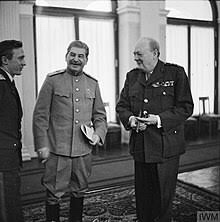
Winston Churchill, General Alan Brooke and Joseph Stalin decided to replace Auchinleck, appointing Lieutenant General William Gott as Commander of the Eighth Army and General Sir Harold Alexander Commander-in-Chief in the Middle East.

Finally the axis was insufficiently victorious with many losses.
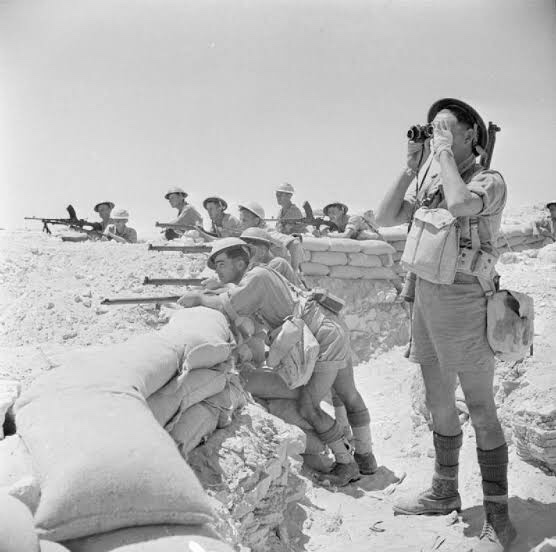
First battle of El Alamein.

The first battle of El Alamein was a battle in the Western Desert campaign of World War II, where the Axis forces, commanded by Erwin Rommel, and the allied forces under Claude Auchinleck fought. The battle stopped the second advance made by the Axis forces in El Alamein, Egypt.

The objective of these battles by the German side was to be able to conquer the Suez Canal and Egypt, which were in British hands, and to support the German troops who were marching towards the Caucasus in a gigantic pincer.

July 1, 1942 – July 27, 1942

Conditions of the Anglo-Soviet Pact.

These conditions were established by the governments of both the United Kingdom and the Russian Soviet Federative Socialist Republic.

– Direct or indirect propaganda against the opposing government outside the borders of the other’s country and the encouragement of other countries to undertake hostile actions against each other’s government.

– Permission for citizens of another country to return home.

– Elimination of existing commercial and economic blocs between the two countries, except for the regulation of the arms and ammunition trade.

– The respective privileges of the ships of others and the treatment that will be granted to all foreign merchant ships, with all the respective contents, including the crew and cargo.

– Each country can designate several of its nationals to ensure that the agreement is given due effect.

Anglo-soviet pact against germany.

Fue una alianza militar formal que fue firmada por el Reino Unido y la Unión Soviética contra la Alemania nazi el 12 de julio de 1941. Both powers pledged to help each other and not to make separate peace with Germany. The military alliance would be valid until the end of World War II.

The Soviet Union intended to support the restoration of independence for Poland, Czechoslovakia, and Yugoslavia in the postwar period.

Political changes of the Balkan Front.

Albania manages to regain its autonomy and became an independent state under the command of the former partisan leader Enver Hoxha.

The ELAS communists who had control of Greece agreed to form a mixed government, which increasingly displaced the communist parties.

It was determined that Great Britain and the Soviet Union would share political dominance in Yugoslavia, however, when Tito won the elections in November 1945, he proclaimed a new constitution and in no time became dictator.

In 1948 Yugoslavia was expelled from the Cominform and in 1956 it promoted the creation of the Movement of Non-Aligned Countries.

Territorial changes of the Balkan front.

In the Treaty signed in Paris in February 1947, Italy renounced the right to possess colonies throughout the world, ceded all the islands of the Adriatic Sea facing the Balkans to Yugoslavia. This country also received the Istrian peninsula, the western part of present-day Slovenia and the port of Fiume.

The region north of Istria and the city of Trieste remained under international administration as the Free Territory of Trieste until 1952. In that same year, Italy received part of the territory corresponding to the current Province of Trieste and Yugoslavia took the rest.

The Dodecanese Islands were administered by the United Kingdom until 1947

Balkan front.

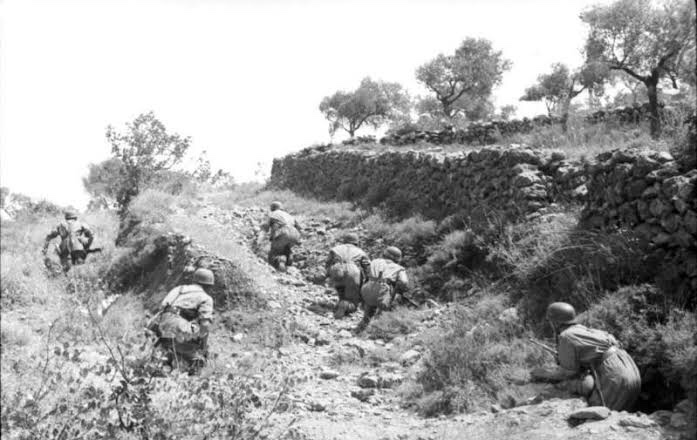
It was opened in 1940 when Benito Mussolini ordered the invasion of the Kingdom of Greece. The failed Italian campaigns in the Balkans prompted a German response that ended with the subjugation of the Balkan nations.

The countries that sent significant amounts of their armies to this front were: Germany, the Independent State of Croatia, the United Kingdom and Italy. It should be noted that the partisans and guerrillas from Greece and Yugoslavia faced the troops of the Axis forces.

October 2, 1940 – June 1, 1941

Blue Division.

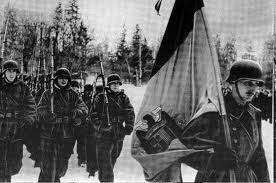
It was a unit of Spanish volunteers that formed an infantry division to fight against the Soviet Union in World War II. It was framed within the Heer, army of Nazi Germany. Between 1941 and 1943, about 50,000 Spanish and some Portuguese soldiers participated in various battles mainly related to the siege of Leningrad.

146 women were also part of the division, from the so-called Women’s Section, who traveled as nurses in the newly created Corps of Auxiliary Ladies of Military Health under the direction of María de las Mercedes Milá Nolla.

1941 – 1943

Operation Barbarossa.

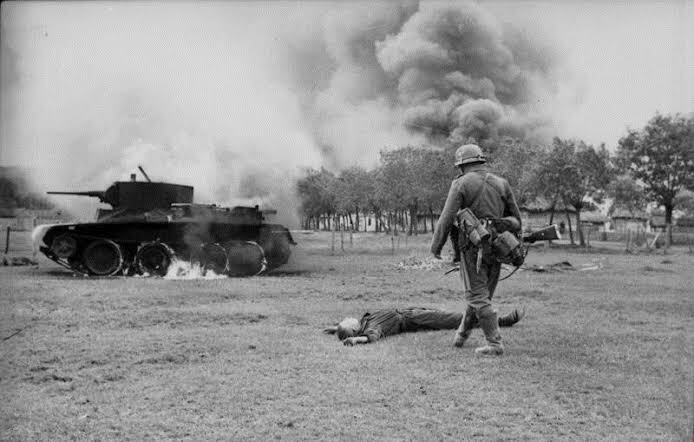
Operation Barbarossa was the code name given by Adolf Hitler to the plan of invasion of the Soviet Union by the Axis Forces during World War II. The name of the operation is a tribute to Federico I Barbarossa, whose name is linked to 19th century German nationalism.

Soviet forces suffered heavy casualties and lost large tracts of territory in a short time. However, the arrival of the Russian winter ended German plans to end the invasion in 1941 and nullified Hitler’s hopes of winning the Battle of Moscow. The operation ended on December 5, 1941 with the withdrawal of the German army.

June 22, 1941 – December 5, 1941

Wannsee Conference.

The Wannsee conference was the gathering of a group of civil, police and military representatives of the government of Nazi Germany on the final solution of the Jewish question. The agreements made led to the Holocaust.

The Wannsee Conference determined that how Hitler’s decision to solve the «Jewish problem» through systematic mass murder should be passed on to the appropriate ministries and bureaucracies.

January 20, 1942