Casablanca conference.

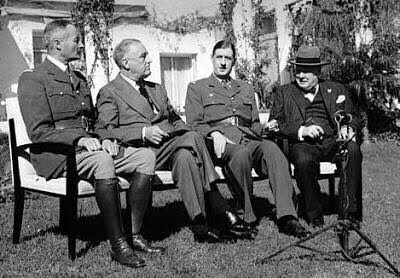
The Casablanca conference was held at the Anfa Hotel, in Casablanca (Morocco). The conference was held from January 14 to 24, 1943, with the aim of planning a European strategy for Allied operation during World War II. Franklin Delano Roosevelt, Winston Churchill, Charles de Gaulle and Henri Giraud were present at this conference.

The declaration of the Casablanca conference stated that unconditional surrender should be sought by the Axis Powers. It was also agreed to help the Soviet Union, carry out the invasion of Sicily and Italy, and recognize the joint leadership of Free France by de Gaulle and Giraud. Roosevelt presented the results of the conference to the American people via radio on February 12, 1943. It was also agreed that there would be no invasion through the English Channel during 1943.
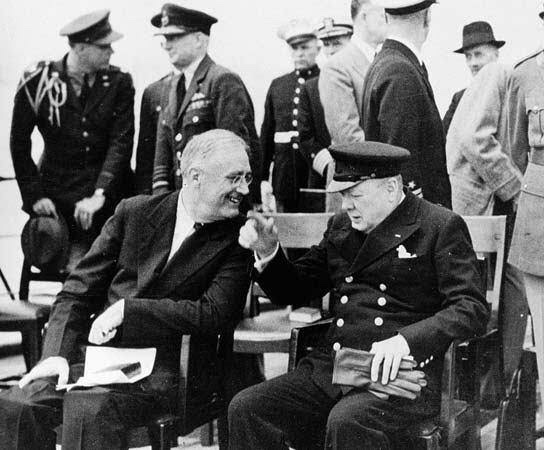
Atlantic Charter.

The Atlantic Charter is a joint declaration signed on August 14, 1941. President Franklin Delano Roosevelt spoke on behalf of the United States and Winston Churchill on behalf of Great Britain. The purpose of this letter is to make known certain common principles in the national politics of their respective countries, upon which their hopes of achieving a better future for the world rest.

It was later incorporated into the United Nations Declaration approved on January 1, 1942.

Potsdam Conference.

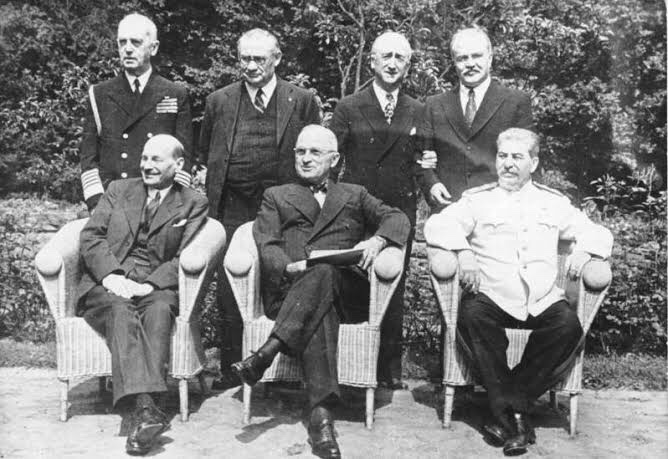
The Potsdam Conference was a meeting held in Potsdam, Germany between July 17 and August 2, 1945 and held at the Cecilienhof Palace. The participants were the Soviet Union, the United Kingdom and the United States. The heads of government of these three nations were the general secretary of the Communist Party of the Soviet Union, Iósif Stalin, the prime minister Winston Churchill and the president Harry S. Truman.

They had agreed to decide how they would manage Germany, which had surrendered unconditionally on May 8. The objectives of the conference also included the establishment of a postwar order, peace treaty matters, and the study of the effects of war.

Teheran Conference Agreements.

1.- In Yugoslavia, partisans must be provided with as much material and equipment as possible and which must also be assisted by commando operations.

2.- Turkey goes to war alongside the Allies before the end of the year.

3.- If Turkey were to find itself at war with Germany, and then Bulgaria declared war or attacked Turkey, the Soviet Union would immediately go to war with Bulgaria. This fact could be used to pressure the Turks to enter the conflict.

4.- Allied leaders took note that Operation Overlord was to take place in May 1944, in connection with an operation that was to take place in the south of France. The conference also took note of Stalin’s statement that the Soviets would launch an attack at the same time against the Germans from the east.

5.- The General Staff of the three countries agreed to maintain contact to coordinate the following military and political movements.

Teheran Conference

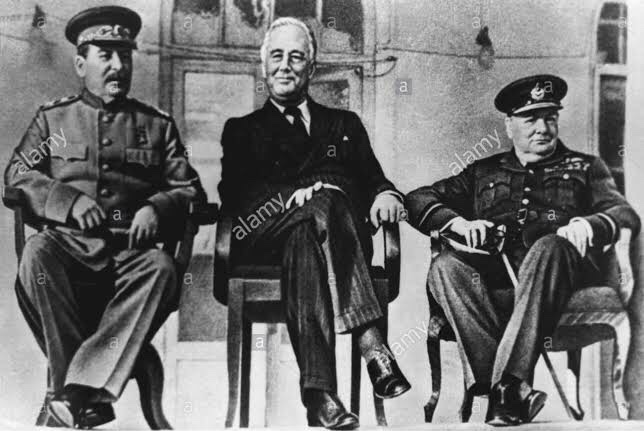
The Tehran conference was a meeting between Stalin, Churchill and Roosevelt on November 28 and December 1, 1943, which belong to the block of the allies. The main objective of this conference was to analyze military issues.

The main decisions taken were:

1.- Agreement on the partition and dismemberment of Germany after the defeat of the Hitler regime.

2.- Despite the apprehension of the Western powers, the «displacement of Poland to the west» is agreed. The Soviet border would reach the Curzon line and, in return, Poland would annex the eastern German territories.

3.- The debate on the specific organization of the future United Nations Organization began, approving an act in this regard.

Yalta Conference.

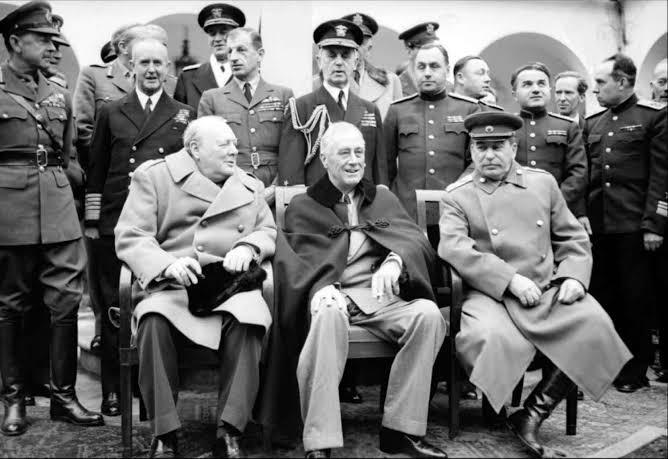
At the Yalta Conference, Stalin, Roosevelt and Churchill met in February 1945 with the aim of designing the agreements for the end of the war. It was decided that Germany would be divided into four occupation zones administered by the USA, USSR, UK and France; Other issues that were submitted to consideration were compensation, and the right of the USSR to consolidate an area of influence in Eastern Europe.

Atomic bombs in Hiroshima and Nagasaki.

In 1945, the United States and Japan fought for four years in the Pacific War.

On July 26 of that year, the president of the United States, Harry Truman, issued an ultimatum against the Japanese. He demanded unconditional surrender, otherwise swift and total destruction awaited them.

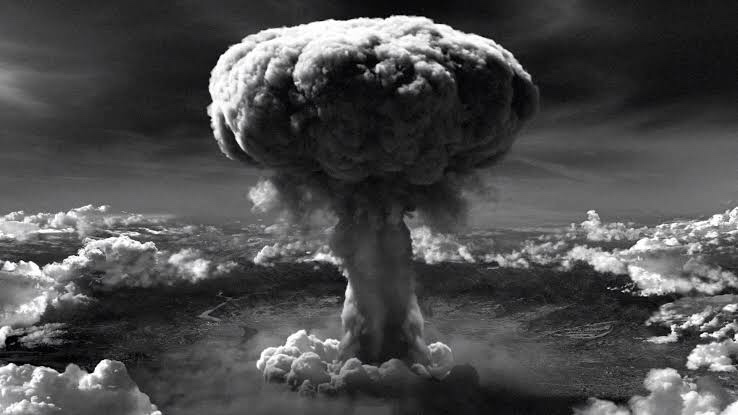
On August 6, 1945, the United States dropped the first bomb on Hiroshima, this bomb was called Little Boy. On August 9, 1945 the second bomb was dropped on Nagasaki, this bomb was called Fat man.

Finally, Japan declares itself defeated on August 14, 1945.

Japanese attack on Pearl Harbor

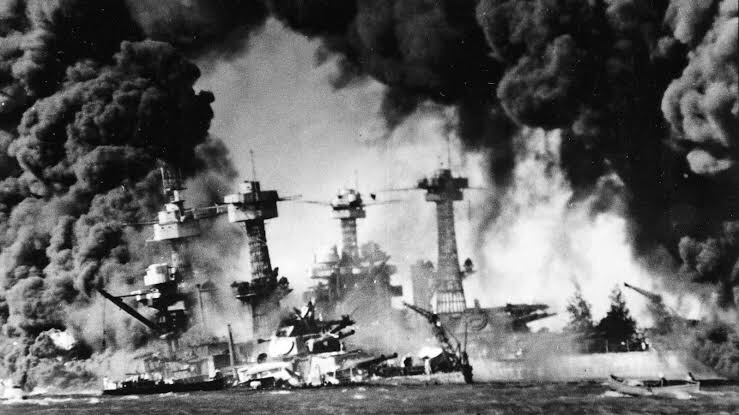
On the morning of Sunday, December 7, 1941, the Imperial Japanese Navy attacked the US naval base at Pearl Harbor (Hawaii).

The Japanese victory was absolute and became the first part of a rapid offensive to seize the Pacific Ocean and its main strategic points.

The idea was to depend less on the United States because it was their oil supplier. The day after the attack, President Franklin Delano Roosevelt announced the entry into the war against Japan and the Second World War.

Battle of England

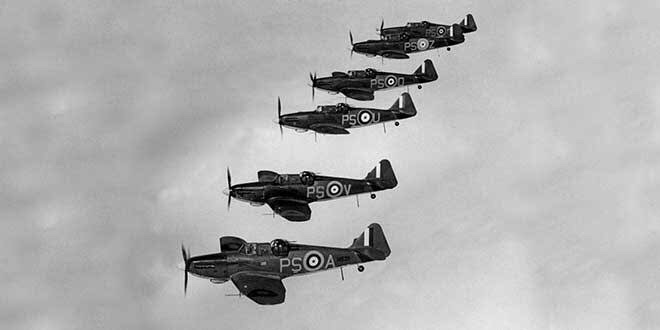
The Battle of Britain was a series of minor battles and operations that aimed at the conquest of England by Nazi troops in the Second World War.

Hitler’s Nazi Germany wanted to invade and subdue England. Germany needed
air superiority to carry out the project.

German attempts to destroy the RAF (British Air Force), led to fierce air battles, which finally the Luftwaffe (German Air Force) failed to win.

July 10 – October 31, 1940